Leadership coaching case study
How a clinical nurse lead built buy-in across five teams she did not manage
The evidence pointed to a better way of working. Her challenge was influencing without authority: getting five teams to put it into practice when none of them reported to her.
She was a clinical nurse lead responsible for improving quality across five teams. This was not simply her own idea about how things might be better. Reviewing caseloads against the evidence had highlighted opportunities to improve the clinical pathway, the consistency of assessments, multidisciplinary decision-making and discharge processes.
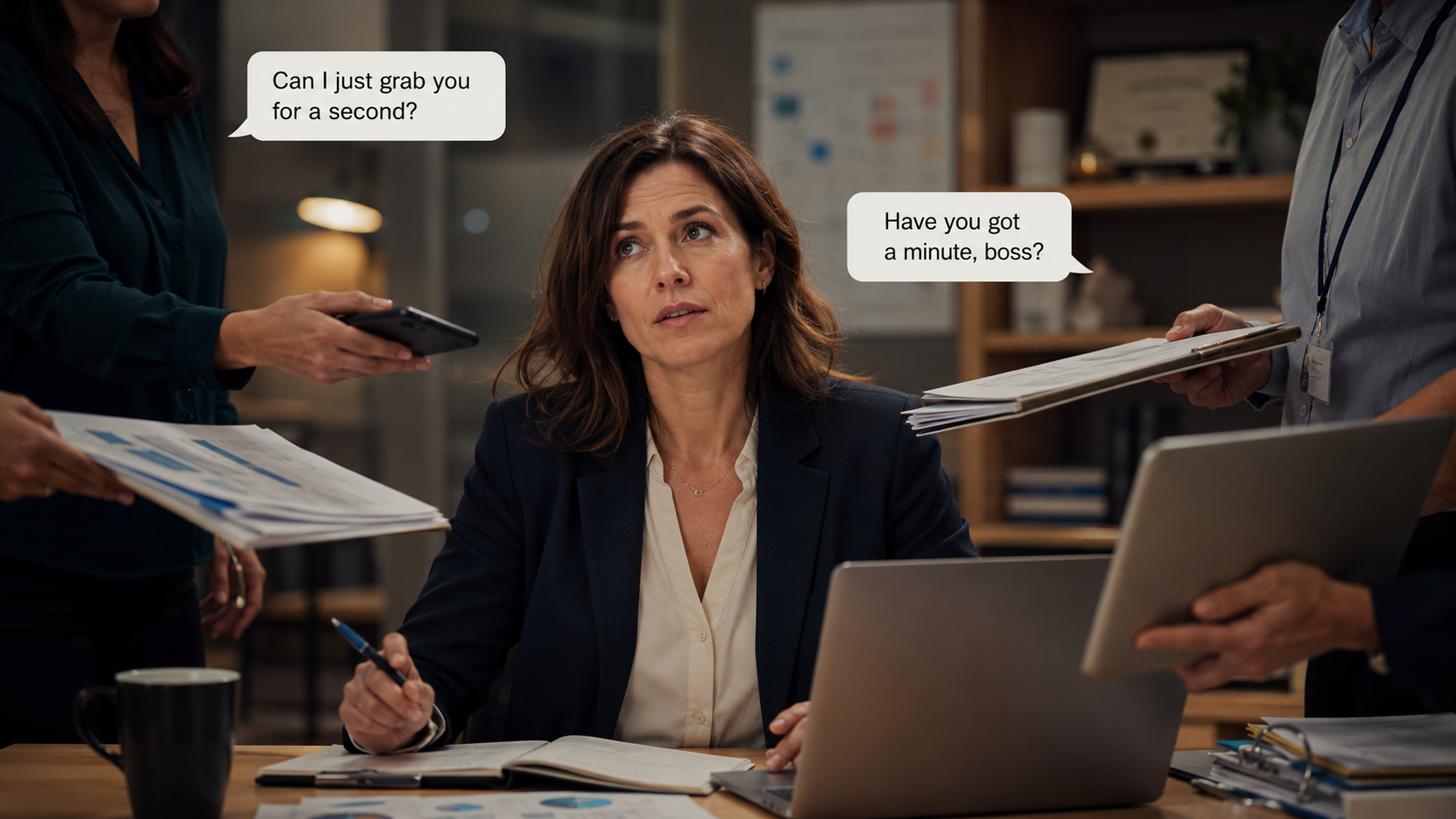
She could see what needed to change. The much harder part was influencing without authority: getting the managers and teams responsible for delivering the service to change how they worked when she had no line-management authority over them.
Senior leaders agreed that the work needed to move forward, but their support often amounted to some version of “get on with it”. She was expected to create the change without much practical sponsorship, operational support or help building ownership across the service.
She had presented the clinical case, spoken to people individually and tried to get into the right meetings. Yet progress remained painfully slow, and she described feeling as though she was banging her head against a brick wall.
When she first approached coaching, she said she wanted support to develop her courage and confidence in leadership as she considered her career development. She wrote this:
This was therefore about more than getting one project moving. It was about whether she could feel more confident and be effective as a leader in a role where she was expected to influence people she did not manage, or whether she needed to find a different job.
At a glance
A note on the outcome. Four coaching sessions did not complete the rollout of a new pathway or make a complex system move quickly. They did help her create visible progress, strengthen her courage and confidence in leadership, and develop an approach she was able to use again.
Is this you?
- You are responsible for improving something across teams that do not report to you.
- The evidence shows that something needs to change, but the people delivering the work are not changing what they do.
- You have explained the case, possibly more than once, and people agree with you but very little actually happens.
- Senior leaders tell you to get on with it but do not provide the practical support or sponsorship needed to make it happen.
- You keep leaving meetings with all the actions and are not entirely sure how it keeps happening.
- You suspect your good idea may be landing on colleagues as one more thing for their already enormous to-do list.
- You care deeply about making things better but are becoming frustrated, stuck or less confident in your ability to lead the change.
When this may not be the right fit
Not every influencing problem is a coaching problem, and it is worth being clear about that.
If the change genuinely requires resources that are not available, coaching cannot conjure them. It may help you recognise and communicate the constraint more clearly, but that is not the same as removing it.
If you are certain the problem is entirely other people, the work may feel uncomfortable. Coaching will usually include looking at what you may be doing, often with very good intentions, that is contributing to the response you keep receiving.
If you want a perfect communications script, this is unlikely to be it. There is no magical sentence that makes a busy manager take ownership of something. The useful work is understanding their perspective, being clear about what you need and changing the conversation between you.
If you cannot protect an hour every few weeks, it will be harder to build momentum. The sessions provide the space to think, while much of the change happens in the conversations you test between them.
The pattern underneath
She already knew that sustainable change should not simply be done to people. This was not a case of somebody needing to be taught that involvement, listening and buy-in matter.
The gap was between what she knew in principle and what she could see in her own approach while trying to lead a live and difficult change.
The clinical case felt clear to her. Because she could see why the pathway needed to improve, her natural response was to explain the evidence, describe the benefits and try to persuade people to adopt the new approach. From her perspective, she was making an important and reasonable case for better quality.
From the teams’ perspective, however, the same message could land as more process, more administration and another demand to fit into an already pressured day. Their lack of action did not necessarily mean they disagreed with better quality. They may not yet have been able to see how the change would work in practice or what benefit it would bring to them.
A related blind spot appeared later, once the pilot had started to attract interest. She needed the team manager to make decisions about roles and responsibilities, but she had not said clearly what she needed the manager to own. She assumed the need was obvious; the manager assumed she would ask if support was required.
In both situations, her intention made sense. The difficulty was that other people could not automatically see what she could see, or know what she needed without it being made explicit.
What we worked on
This was not a training session where she was given a new influencing model and told what to do. The insights emerged by slowing down real situations and looking at them closely: what she had intended, what she had actually said, what the other person might have heard and what happened next.
That process helped her notice where sensible leadership principles were not yet translating into the result she wanted, and identify practical experiments she could try between sessions.
Starting with one open door. Rather than trying to launch the change across every team at once, she identified one person who seemed more open to the idea and began there. Starting with one willing person made the work more practical and created somewhere to test the pathway, learn what support was needed and show colleagues what the change could look like in practice.
Understanding the pressure before selling the solution. She began having more exploratory conversations about the reality of the work: what was creating pressure, where time was being lost, which parts of the role people valued and what would make the proposed pathway useful rather than simply another demand.
This was not about making people feel listened to before returning to a predetermined pitch. It was about allowing their experience to shape how the change was introduced and developed.
Through those conversations, she saw that a clearer pathway could potentially reduce duplication and create more time for direct clinical work. That was a more meaningful benefit for the teams than asking them to support an improvement project simply because the evidence showed that practice needed to change.
She also thought more carefully about professional pride. A quality-improvement message can easily be heard as “what you are doing now is not good enough”, particularly by people already doing their best under pressure. The aim became to acknowledge what teams were already managing well and frame the pathway as a series of achievable improvements, rather than as a judgement on their current practice.
Three groups, none of whom reported to her, each needing a different conversation.
Moving from interest to operational ownership. Once people began showing interest in the pathway, the next challenge became clearer. Interest alone did not create a workable process. Staff were beginning to suggest people who might benefit from the pathway, but the next step could not always be to email her and ask her to organise it. If the change was going to last, responsibilities needed to sit within the team rather than continuing to depend on her personally.
She had arranged a meeting with the team manager expecting them to work through those operational decisions together. Instead, the purpose remained vague, she found herself explaining the project again and she left with all the actions.
Her first conclusion was that the manager was not really bought in. During coaching, she used the phrase, “I need her to…”, which led to the question: does she know that you need her? Her answer was: “I haven’t said it directly.”
That helped her become much clearer about what she was actually asking for: decisions about who would complete each part of the process, how those responsibilities would fit around existing roles, how follow-up would happen and what the manager needed to own for the pathway to become part of normal practice.
The practical shift was from inviting a general conversation about the project to making a direct and specific request for the decisions only the manager could make. Collaborative leadership did not mean avoiding directness. She could listen, involve people and still be clear about what she needed them to own.
Translating the change for senior leaders. Senior leaders had told her to progress the work, but that did not automatically create useful sponsorship or practical support. She therefore began considering how to connect the clinical case to the things they were already accountable for: service priorities, quality measures, performance and assurance.
Her memorable shorthand was: which spreadsheet are we turning green? This did not mean reducing the work to box-ticking. It meant making the value of the change visible in the language used in the rooms where decisions were made.
She also experimented with asking herself: how can I turn this from frustrating into fascinating? Rather than mentally checking out of slow and unsatisfying meetings, she could become curious about what mattered in the room, what gained attention and how she might use that understanding more strategically.
What changed
The pilot began to gain genuine interest. She started implementing the pathway with one willing team member and discussing it with the wider team. By the third session, she felt the balance had shifted. She was no longer only trying to sell the vision; more than half of the team had come round, and colleagues were beginning to suggest people who might benefit from the pathway themselves. Some were emailing her directly to ask whether someone could be added to it.
That was real progress, while also revealing the next stage of the work: turning interest into a process that did not rely on her to coordinate every step.
The pilot survived losing the person it depended on. Not long after the work began, the nurse she had identified as her early adopter handed in her notice. Rather than starting again with somebody else, she used the eight weeks that remained, continued implementing the pathway with her and let the wider team see it working. That visible example appeared to do more than any amount of explaining had managed.
She became more proactive in senior meetings. In one meeting, she noticed the familiar frustration rising because the discussion was slow and there was no clear action plan. Rather than leaving with the sense that nothing had happened, she and a peer took responsibility for two actions from the agenda and agreed to bring them back.
It was a small moment, but it reflected a different posture. She was becoming more proactive about creating movement while still recognising that the wider system would not change overnight.
Her courage and confidence in leadership increased. Developing courage and confidence had been part of her original reason for seeking coaching. By the review, she said she felt more confident in her leadership skills because she had a clearer framework for how to approach the work and could see that her new approach was beginning to have an effect.
She also felt less preoccupied with people-pleasing and other people’s opinions. She linked this to getting alongside people and understanding what would help them, rather than feeling she had to tell them what to do and then worrying about whether they disliked her for it.
She used the learning again. After the coaching ended, she was asked to support another process change across the wider service. This time she felt more confident advocating for teams to be involved from the beginning rather than having a top-down change imposed on them.
She acknowledged that raising this could still feel uncomfortable, but she had seen the benefits and felt more able to push for it. She was also having more contact with senior leaders and deliberately trying to understand the agenda from their perspective, including asking which organisational measure or “green spreadsheet” the proposed change would support.
The outcome was not simply that one pilot gained traction. She had developed an approach she could take into the next piece of change.
What had not changed yet
The pathway was not fully embedded and operating independently by the end of the coaching. The pilot had created interest and some early implementation, but the detailed operational work was still being developed. Roles, follow-up arrangements, management ownership and the process for spreading the approach more widely all needed further work.
That is normal for this kind of service change. A pathway does not move from idea to business as usual in a few conversations. It needs testing, iteration, decisions, follow-up and reinforcement.
The conversation with the team manager also did not resolve within the engagement. She made the direct ask, and by the final session it had still not produced what she needed. That is worth saying plainly, because it would be easy to end on the insight and imply the insight was the result.
The pace also remained slow. Her phrase for it was “walking through treacle”, which may be one of the most accurate descriptions of trying to lead change in a large system. Coaching did not make the organisation faster, but it helped her become clearer and more deliberate about how she used her influence within it.
There is also something we would approach differently in a future organisational engagement. Nearly everyone she needed to influence was outside the coaching room: the operational manager, senior leaders and the teams. The confidentiality of one-to-one coaching gave her a safe place to think honestly, which mattered. But it also meant she was doing most of the adapting herself while the wider system had no explicit role in supporting the change.
That is one reason we now think carefully about who should be involved at the beginning and end of organisationally funded coaching, particularly when the challenge is leading across boundaries without formal authority.
But isn’t this just basic influencing?
On paper, the principles are straightforward: listen to people, understand their pressures, start small, make a clear request and connect your idea to what the organisation already cares about.
She would probably have agreed with every one of those principles before coaching. She may even have been able to teach them. But knowing that change should not be done to people is not the same as noticing the exact moment your own approach is landing that way. Knowing that clear requests matter is not the same as recognising that the request you thought you had been making had never actually been said out loud.
That is the gap coaching can help with. Most leaders do not need another list of leadership principles. They need the time, space and challenge to examine what happened in a real conversation: what they assumed, what they actually said, how it may have landed, what they needed but did not ask for and what they could try differently next time.
The principles were not new. The difference was being able to see where her current approach was unintentionally limiting buy-in, and then turn broad leadership knowledge into specific conversations and actions. More information was not the missing piece; applying what she already knew in the moments that mattered was.
A different situation, the same through-line. Our first leadership coaching case study follows a senior leader with a team of 30 who was learning to delegate the thinking rather than simply the tasks. A different problem, and the same underlying skill: changing what happens in the conversation.
In her own words
“Since we last spoke I have been asked to support another change in process across all teams. Based on the work I did with you I feel much more confident now to advocate for those teams in terms of involving them from the beginning rather than imposing a top down change on them.
This has felt uncomfortable at times but I do feel more confident to raise and push this given the benefits I saw it having over last summer.
I am having more contact with senior leaders in terms of shaping this and am working to ensure I understand the agenda from their viewpoint (which spreadsheet are we turning green!) so I can factor this into conversations about how we can effectively manage this change.
I feel more confident overall to discuss effective change management principles and try to implement them, so thank you!”
Clinical Nurse Lead, NHS organisationOn the coaching itself, she said the sessions felt positive, relaxed and conversational rather than rigid or overly formal. She valued the humour and light challenge, felt the level of challenge was about right and noticed that even the silences sometimes prompted her to think more deeply. She described the coaching as supportive and said she was getting a lot from the process.
This coaching was provided through the NHS Coaching Hub and was free at the point of use to the client. Her feedback was given voluntarily. The case study has been anonymised and is shared with her permission. Some identifying details, including numbers and elements of the service context, have been adjusted slightly to protect confidentiality without changing the substance of the case.
For sponsors, commissioners & L&D leads
Assessing this for your organisation?
The organisational risk. Much of the improvement work in large organisations depends on people who have responsibility without authority: clinical leads, project leads, quality leads and subject-matter experts who are expected to create change across teams managed by somebody else.
When they cannot influence effectively, the improvement may stall. There is also a less visible cost: the individual can become increasingly frustrated, overloaded and demotivated by repeatedly trying to move work that never seems to land.
This client originally approached coaching because she wanted to develop greater courage and confidence in leadership, felt stuck and was unsure about her next steps. That is the organisational risk that may not appear on a project plan. It can later show up as disengagement, burnout or the loss of a capable person who still cares deeply about improving the service.
What is repeatable. A capable specialist, a clear evidence base, teams already working at capacity and senior leaders who expect progress without always creating the conditions needed to deliver it. This is not unique to the NHS. It appears in most large or complex organisations.
What is realistic. Four sessions created visible movement within one pilot and, more importantly, gave the leader an approach she later transferred to another piece of work. It did not complete the pathway or make the system move quickly. For organisationally funded coaching, we would usually recommend six sessions across three to six months so that the leader has time to practise, review what happens and adapt their approach.
Worth noting for this type of engagement. When the challenge involves influencing people the leader does not manage, the most useful person to involve in an opening three-way session may not always be their line manager. It may be a sponsor or senior colleague with the authority to open doors, clarify expectations or create the conditions for the work to succeed.
Three-way coaching
This is the approach we would now recommend for most organisationally funded coaching.
An opening session with the leader, their line manager or relevant organisational sponsor, and the coach. Together, we agree what the coaching is intended to support and what would be noticeably different if it worked. The manager or sponsor hears and contributes to those outcomes and considers their own role in creating the conditions for change.
Confidential one-to-one coaching. The leader then has six private coaching sessions. The content of those conversations remains confidential.
A closing session with all three. This is less about coaching and more about taking stock: what has changed, what remains in progress and what needs to happen next. The leader presents and the coach facilitates.
That order is deliberate. It keeps ownership with the leader and makes their development visible to someone who may influence their future opportunities. It is intended to support the leader, not to create a report about them.
Why this matters. Coaching often underdelivers not because the leader fails to change, but because they return to an environment that continues to pull them towards their old behaviour. Involving the manager or sponsor helps make the environment part of the solution rather than something the leader must work against alone.
How we would evidence it
We keep this deliberately proportionate. A leadership coaching engagement does not require an elaborate evaluation exercise, but it should produce evidence that is meaningful to the leader and organisation.
At the opening session, we ask one central question:
One useful observable indicator for an engagement like this one would be:
Are the people she needs taking actions away, or is she still leaving every meeting holding all of them?
Other possible indicators could include:
- Are teams being involved before decisions are finalised?
- Are operational responsibilities becoming clearer?
- Are colleagues beginning to use or advocate for the new approach without relying on her to coordinate every step?
- Can she connect proposed changes to agreed organisational priorities and measures?
- Is senior sponsorship becoming more practical and visible, rather than simply “get on with it”?
The aim would not be to create an enormous evaluation exercise. It would be to agree a small number of visible changes at the beginning and review what had moved by the end. At the closing session, the leader presents a concise one-page summary of progress.
What this would cost you
The engagement described above was funded through the NHS Coaching Hub, so it cost the client nothing. For transparency, this is what the equivalent support costs privately.
Three sessions
Enough to explore the pattern and begin making changes.
£675
Six sessions
The full leadership coaching programme.
£1,200
Six sessions with three-way coaching
The organisational programme: manager or sponsor involvement at both ends, agreed outcomes and a concise closing summary.
£1,800
Start with three sessions if you are unsure. Continue to the full six within eight weeks and the remaining balance is £525, so you pay no more for choosing to begin with the shorter commitment. We would rather you test whether the approach is valuable than commit to a longer programme before you have experienced the work.
Three-way coaching is designed for organisationally funded engagements, and we do not offer it alongside the three-session block. Two additional facilitated meetings around only three hours of coaching would create a disproportionate amount of structure for a very short intervention.
There are also situations where three-way coaching would not be appropriate. For example, when the leader needs to explore their relationship with their line manager, or that relationship is itself part of the coaching focus, the standard confidential programme may be a better fit. We will discuss this openly and recommend the approach that best protects the usefulness of the coaching.
Before any paid engagement, we offer a complimentary 60-minute coaching session. Bring a real leadership challenge and use the time to work on it. It is a genuine coaching session, not a disguised sales call, and by the end you should have a much clearer sense of whether the approach is useful for you.
Ready to test the approach?
Bring a real leadership challenge to a complimentary 60-minute session. We’ll use the time to understand what’s happening, explore what may be contributing to it and identify a practical next step.
Book your complimentary coaching session →One Life Coaching provides one-to-one leadership coaching and leadership coaching training for middle managers and senior leaders. Coaching is delivered by one of our qualified coaches. The engagement described in this case study was delivered by Alison.