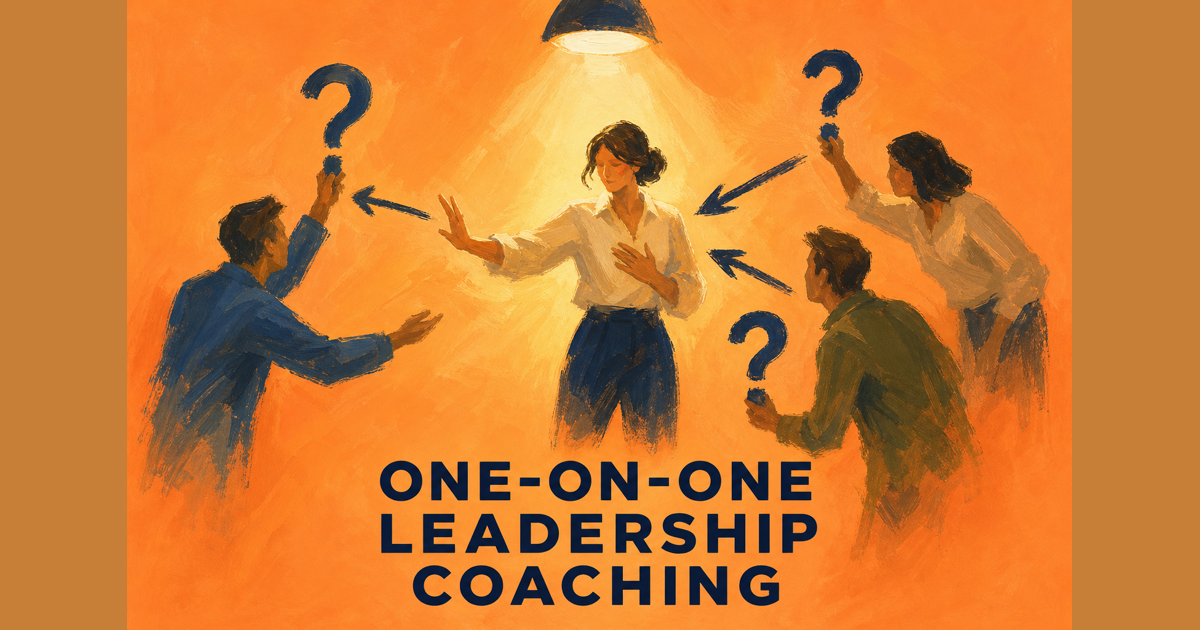
How being too helpful can quietly turn your team into a queue outside your door — until no one takes the initiative, and you're stuck firefighting. Here's the one question that breaks the cycle.
"My team are great… but I always have to tell them what to do. They just don't take any initiative!"
An exasperated director came to me for coaching because she was overwhelmed that everything came back to her.
Every question. Every problem. Every "just checking this" —
Knock, knock. "Can I grab you for a minute, boss?"
She was a good leader. Her team respected her, the seniors respected her, and the work got done. But she was constantly firefighting — reactive, and working overtime just to do her own actual job, because so much of her day went on solving other people's problems and answering their questions.
Why your team stopped taking initiative
The breakthrough in coaching came when she realised something that's hard to hear: the very behaviours that had made her so successful as a leader were now the thing creating the problem.
Let me say that again, because it's the whole point.
Because she was so capable, so caring, and so busy, she'd become brilliant at solving problems fast and helping her team. And the effect of all that helping was that her team slowly stopped thinking things through for themselves. They stopped taking initiative. They started coming to her more and more.
No one did anything wrong. But the more she solved, the more dependent the team became on her solving. They were busy too — and going to her was quicker all round.
How the firefighting cycle feeds itself
Once it takes hold, it becomes a loop that keeps repeating:
The one question that breaks the cycle
So here's my top tip for the busy, helpful leaders who see themselves in her. Before you answer the next question from your team, pause and ask yourself one thing:
That single pause is where the cycle starts to break. Sometimes the most helpful thing you can do isn't to give the answer — it's to hand the thinking back: "What do you think we should do?"
It feels slower in the moment. It costs you ninety seconds now instead of the thirty it takes to just tell them. But it's an investment. Every time you give the thinking back, you're building a team that thinks for itself, takes initiative, and stops needing you for everything — which is exactly how you get out of firefighting and back to actually leading.
Lead like a coach, not a firefighter
This is exactly the kind of practical leadership development we work on in our CMI coach training for managers and leaders — helping teams build more ownership, initiative and accountability, so leaders can spend less time firefighting and more time doing the work that matters.
Explore CMI Coach Training →