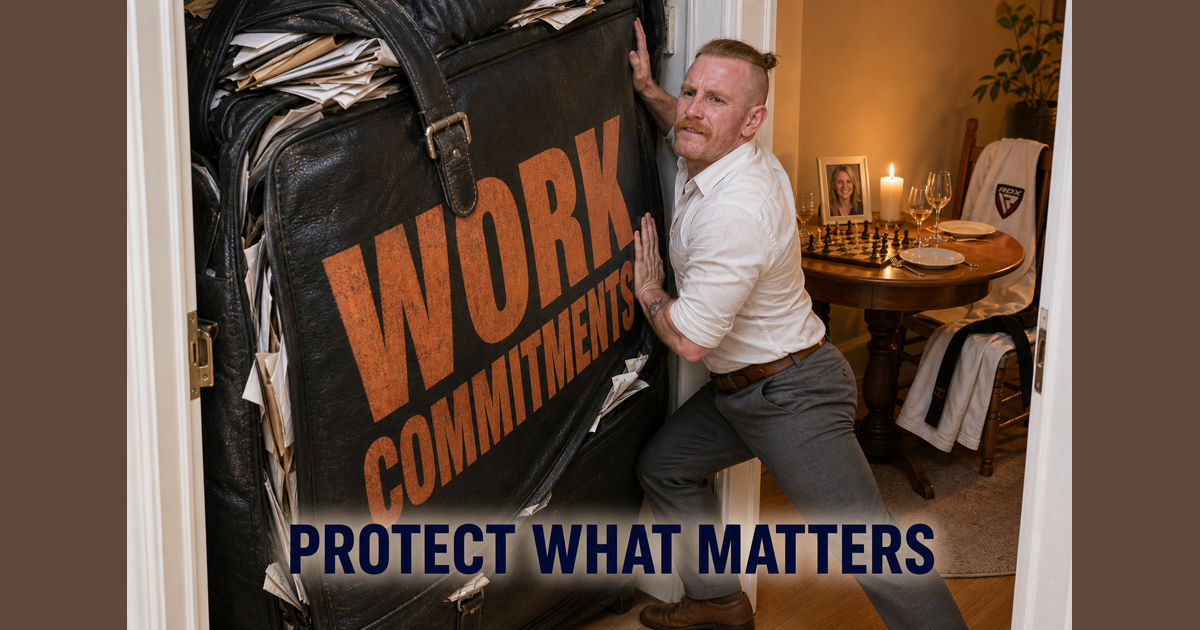
It often takes more discipline to stop working than to carry on. That sounds backwards until you notice what actually happens when you sit at your desk with no end point in sight. Sitting in your office doing ineffective work is the easy option. It feels productive because you’re there, but being there isn’t the same as getting anywhere.
We explained this recently to Dr Noni, whose writing advice you can find on her TikTok, and the logic is simple. When you set yourself a deadline to stop, Parkinson’s Law kicks in. Give yourself until midnight and you’ll be rushing at midnight. Give yourself until 6pm and you’ll be rushing at 6pm. The task expands to fill whatever time you hand it, so the discipline isn’t in working harder, it’s in deciding when you’ll stop and holding that line.
Why stopping on purpose feels uncomfortable at first
Clients who try this with us often tell us exactly how uncomfortable it is. There’s a real pull to keep going, to squeeze out one more hour, and some of them, at least for a while, resent being told to close the laptop. But the discomfort turns. They find they have more energy, they’re chomping at the bit to get back to it the next day, and somehow they end up being more productive while working fewer hours.
This connects to something we’ve written about before: procrastination is not a time management problem, and neither, really, is overwork. Both come down to how you relate to the task in front of you, not how many hours you’ve blocked out for it. If stopping on time feels impossible, it’s worth asking whether that’s a discipline problem or a kindness problem.
The question worth sitting with is whether you’re confusing working a long time with working effectively. If you’d like help finding out, that’s exactly the kind of thing we work through with clients.